
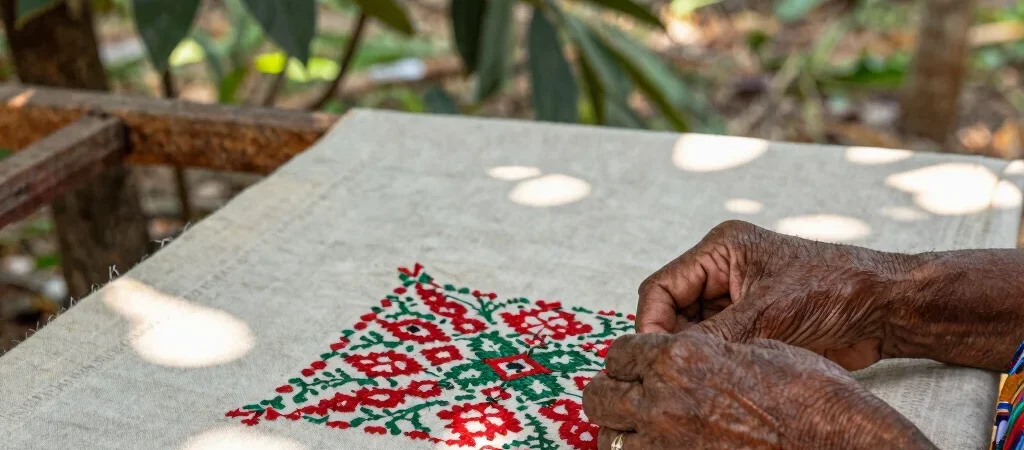
The iconic Kapdagunda shawl is far more than a decorative garment worn during seasonal gatherings. Each geometric stitch etched into off-white coarse cotton reflects a deep, unbroken connection between the weaver and the surrounding Niyamgiri mountains. Through intricate red, yellow, and green embroidery, community artisans record ancestral lineage, local flora, and sacred forest boundaries.
Geometric Symbols Rooted in Forest Topography
The triangular motifs embroidered along the edges directly represent the physical landscape of the Niyamgiri hill range. Red threads denote strength and the life force of the earth, while green symbolizes the dense Sal canopy and agricultural vitality. Understanding these motifs requires looking beyond visual aesthetic to see a spatial map of indigenous territory.
Artisans spin cotton thread using traditional hand spindles, ensuring each shawl maintains a coarse texture that withstands humid monsoon winds and winter chills. The process demands patient handwork, often spanning several weeks for a single piece. Every completed shawl serves as a quiet narrative of patience, skill, and cultural pride.
Passing Down Textile Arts Through Oral Transmission
Knowledge of Kapdagunda patterns is traditionally transferred from elders to youth in quiet village courtyards during non-harvest seasons. Young weavers learn not only the technique of counting threads, but also the songs and stories tied to specific geometric arrangements. This living pedagogy ensures that sacred geometry remains uncorrupted by commercial homogenization.
Documenting these textile practices offers cultural researchers vital context regarding community identity and living heritage. By centering the voices of Dongria Kondh weavers, we honor a vibrant material tradition that continues to protect both memory and land.